
Company News
Biggest USA Cities: Top US Cities by Population
Explore the biggest USA cities by population, how they differ from metro areas, and practical travel tips for America’s largest urban centers.
Discover more


If you’re searching for the Canada exchange rate to US dollars, you’re probably trying to answer a practical question: “How much will my money actually be worth when I pay, withdraw, or transfer?” And yes—there’s the headline CAD to USD exchange rate you see on Google. But the amount you end up with can change depending on timing, fees, and where you exchange.
Most people don’t realize how many “rates” exist at the same time. There’s the mid-market rate (the clean one), the bank’s retail rate (the one you’re offered), and the card/ATM rate (the one you notice only after it’s too late). The goal here is simple: help you understand what moves Canadian dollar to USD, how to convert CAD to USD without surprises, and how to stay connected while you check rates on the go.

Quick tip: If you’re traveling between Canada and the US, check the rate twice—once before you leave, and once right before you exchange or withdraw. It changes. Sometimes a lot. And the timing can matter more than people think.
The Canada exchange rate to US dollars is typically quoted as how many US dollars (USD) you get for 1 Canadian dollar (CAD). When people say “CAD is strong,” they mean 1 CAD buys more USD than before. When it’s “weak,” you’ll need more CAD to buy the same amount of USD.
But here’s the thing—most of the time, you don’t get the pure market rate. Real-world conversions usually include a spread (the built-in margin) and sometimes a separate fee. That’s why two people can “convert CAD to USD” on the same day and get different results.
Currencies react to a mess of forces. Some are slow and predictable. Some are chaos. The usual drivers include:
And yes, everyday travelers feel the effect—even if you don’t follow central bank news. You just notice your hotel bill in New York suddenly “costs more” in Canadian dollars.
A good converter should tell you the market rate and the time it was last updated. It should also let you flip directions (CAD → USD and USD → CAD) because planning goes both ways: sometimes you’re budgeting in USD, but earning in CAD.
Use this simple process:
Travel reality: If you’ve ever tried to check a CAD to USD live rate while landing, roaming charges and weak airport Wi‑Fi can get in the way. UnlimitMobile fits into this moment by keeping you connected on the move so you can verify rates and avoid “whatever the kiosk offers” decisions. (No one enjoys those.)
Get connected with UnlimitMobile Explore plans
People love asking “Is this a good time to convert Canadian dollars to US dollars?” That’s really a question about context. Historical CAD to USD charts help because they show you whether today’s rate is near a recent high, low, or right in the middle.
But don’t overthink it. Exchange rates are famously hard to predict consistently. What charts are great for is setting expectations. If you see that CAD has been trending weaker for months, you may decide to exchange gradually rather than all at once. If it’s been swinging up and down, you might prioritize fee minimization over perfect timing.
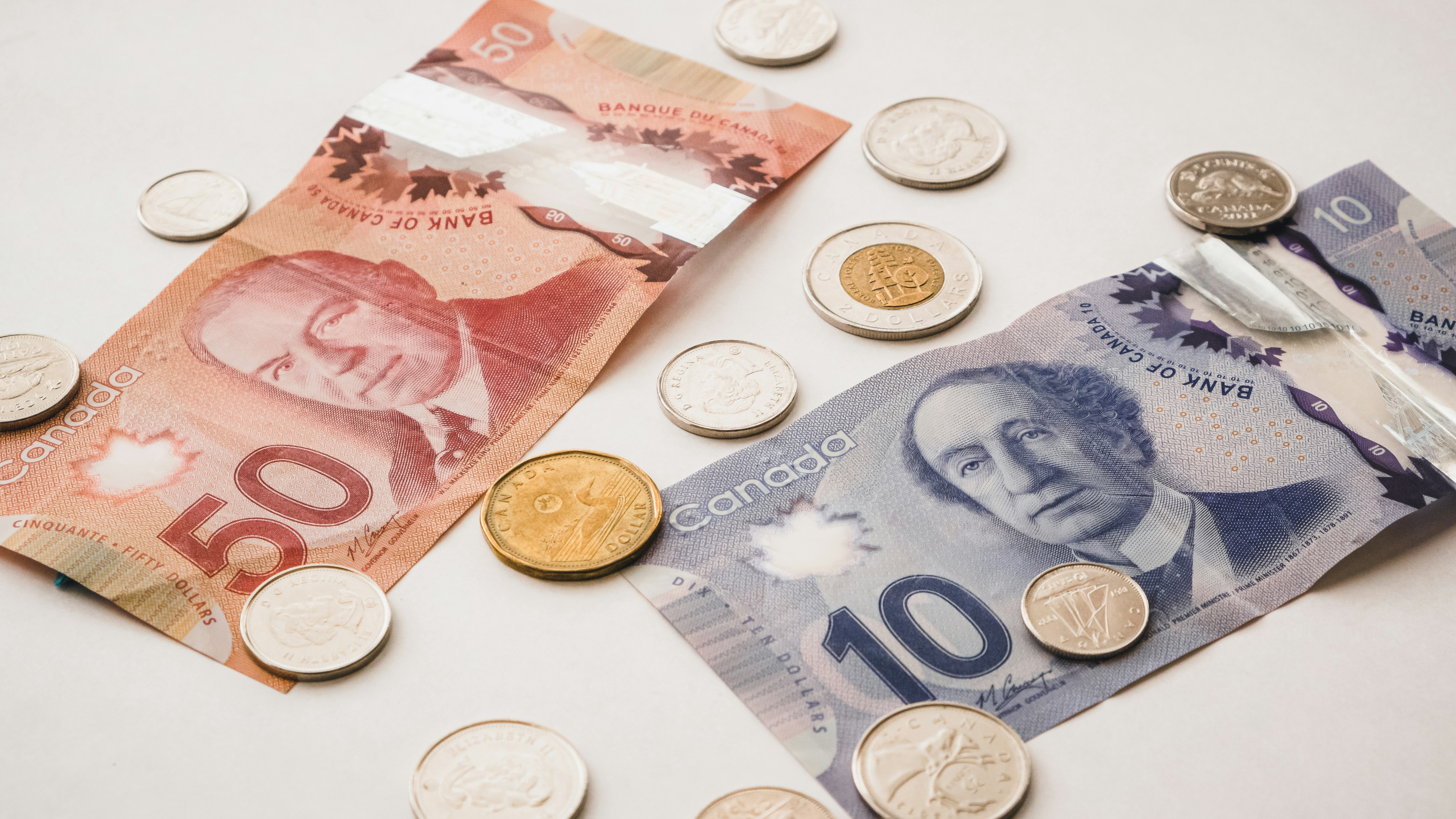
When you check the current CAD to USD rate, make sure you know which rate you’re looking at. The one on news sites is usually a mid-market snapshot. Your bank or exchange counter will quote something else. And your card provider might apply their own conversion method depending on the network and merchant setup.
And then there’s dynamic currency conversion (DCC)—the “helpful” prompt at checkout that asks if you want to pay in CAD instead of USD. It’s often not a gift. In practice, it can bake in a worse rate. If you’re comfortable managing FX, paying in the local currency (USD in the US) is frequently the cleaner option. Not always, but often enough that it’s worth paying attention.
Practical workflow that saves money: check the mid-market rate, estimate your “real” rate after typical fees, then decide whether to exchange now or wait. And do it while you’ve got stable data—UnlimitMobile helps by keeping your connection reliable when you’re crossing borders and need to verify rates quickly.
If you only remember a few things about the Canada exchange rate to US dollars, make them these:
Use a reputable financial news source or currency converter that shows a timestamp and the mid-market rate. Then compare it with what your bank, card issuer, or exchange counter offers, because that “customer rate” often includes a spread.
The exact CAD to USD live rate changes throughout the day. Check a live converter for the latest figure, then estimate your actual received rate by accounting for spreads and fees from the service you’ll use to convert.
Check it close to the moment you’ll exchange or pay. If you’re traveling, do a quick check before you leave and another check right before the transaction. Rates can shift even within the same day, especially around major economic announcements.
You can track it through major financial news sites, currency converter platforms, and many banking apps. The best sources show whether you’re seeing a mid-market rate or a customer rate. If you’re on the move, stable mobile data matters—UnlimitMobile can help you check rates reliably while you travel.
Interest rate differences, inflation trends, economic growth data, commodity prices (notably oil), and market risk sentiment are frequent drivers. Big headlines can move the rate quickly. Slow macro trends can shape it for months.
The market does—banks and currency trading venues continuously buy and sell currencies, forming the prevailing market rate. Retail providers (banks, exchanges, card networks) then quote their own rates to customers, usually with a spread and sometimes fees.
Because small differences add up fast. A wider spread or a couple of fees can cost more than you expect—especially for larger conversions or frequent cross-border spending. Comparing helps you choose the least painful option.
It helps with context—what “normal” looked like recently—and it can highlight volatility. But it won’t reliably predict the future by itself. Use history to understand range and risk, not to expect a guaranteed repeat.
If you’re planning a trip, a purchase, or any cross-border payments, don’t wait until you’re standing in front of a currency exchange counter with a line behind you. Check the Canada exchange rate to US dollars ahead of time, understand what you’ll really receive after fees, and keep access to reliable data while traveling.
Visit UnlimitMobile Check coverage & options
Note: Exchange rates move constantly. Always confirm the final rate and any fees with the provider you’ll use before converting.
Explore the biggest USA cities by population, how they differ from metro areas, and practical travel tips for America’s largest urban centers.
Discover more

Check how the Canada exchange rate to US dollars works, what moves CAD to USD, and how to convert CAD to USD confidently while traveling.
Discover more

Understand USA mobile numbers—format, area codes, how they’re assigned, and what to know when getting a US phone number.
Discover more

Compare US mobile networks by coverage, speed, and value—plus how to pick the right plan with UnlimitMobile.
Discover more

Choose a mobile plan in USA with flexible options for travel, work, or everyday use. Compare SIM vs eSIM, coverage, and data needs with UnlimitMobile.
Discover more

Understand travel health insurance in the USA—what it covers, how to choose limits, and how to stay connected with UnlimitMobile while you travel.
Discover more

Compare the best mobile phone plans in the USA—unlimited, prepaid, family, and no-contract. Pick a plan that fits your data, coverage, and budget.
Discover more

Explore cheap places to live in the USA with practical tips on rent, jobs, and daily costs—plus how to stay connected for less with UnlimitMobile.
Discover more

Understand the US medical care system—insurance, costs, access, ER vs urgent care, reforms, and practical tips for visitors and residents.
Discover more

Move to the UK with confidence in 2026. Discover visas, housing, healthcare, jobs, student life, cost of living, banking, and essential tips for students & expats.
Discover more